
AI tools are easy to adopt but difficult to scale. Many organizations successfully implement a few tools for isolated tasks, only to discover that as workflows grow, these tools become fragmented, inefficient, or difficult to manage.
Choosing the right AI tools is not about features alone. It is about how well they integrate into workflows, adapt to increasing complexity, and support long-term operational growth.
Scalability is not a technical detail. It is a design requirement.
Why Most AI Tools Fail at Scale
At a small scale, almost any tool works.
Problems emerge when workflows expand:
- tools operate in isolation
- data becomes inconsistent across systems
- manual coordination increases
- automation breaks under complexity
We explored similar limitations in workflow automation systems, where scaling exposes structural weaknesses rather than improving efficiency.
The issue is not the tool itself, but how it fits into a broader system.
What “Scalable” Actually Means
Scalability in the context of AI tools is often misunderstood.
It does not mean handling more data or users on its own.
A scalable system should:
- integrate across multiple tools
- maintain consistency as workflows grow
- adapt to new processes
- support automation without increasing complexity
In practice, scalability is about maintaining efficiency as systems expand.
Core Principles for Choosing Scalable AI Tools
1. Integration First, Features Second
A tool with powerful features but poor integration will create friction.
Scalable AI tools should:
- connect with existing systems
- support APIs and data exchange
- operate within broader workflows
Without integration, tools become isolated islands.
2. Support for Workflow Automation
Scalable tools must enable automation across processes.
They should:
- trigger actions based on events
- connect multiple steps in workflows
- reduce manual intervention
We discussed how this evolves in event-driven AI automation, where workflows respond dynamically to data changes.
3. Consistent Data Handling
As workflows grow, data consistency becomes critical.
Scalable tools should:
- standardize inputs and outputs
- maintain structured data
- avoid duplication across systems
This is especially important when integrating analytics or decision-making systems.
4. Flexibility and Adaptability
Workflows change over time.
Scalable AI tools should:
- adapt to new use cases
- support custom logic
- evolve without requiring a full system redesign
Rigid systems limit growth.
5. Observability and Control
As systems scale, visibility becomes essential.
Organizations need to:
- monitor workflows
- track performance
- identify failures
Without observability, complexity becomes unmanageable.
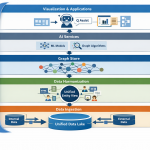
From Tools to Systems
One of the most important shifts is moving from individual tools to interconnected systems.
At a small scale:
- tools solve specific problems
At a large scale:
- systems coordinate workflows
This shift reflects the transition toward agent-based orchestration of software, in which AI systems manage workflows across multiple tools rather than operating in isolation.
Common Mistakes When Choosing AI Tools
1. Prioritizing Features Over Architecture
Feature-rich tools often fail when they cannot integrate.
2. Ignoring Workflow Design
Tools are selected without considering how they fit into workflows.
3. Underestimating Data Complexity
Data inconsistencies become more problematic as systems grow.
4. Over-Automation Without Structure
Automation without clear logic leads to fragile systems.
Building for Long-Term Scale
To choose AI tools that scale, organizations should:
- map workflows before selecting tools
- define integration requirements
- prioritize data consistency
- implement validation and monitoring layers
We explored the importance of validation in reliable AI workflows with human oversight, where structured checkpoints ensure system reliability.
Scaling is not about adding more tools. It is about designing better systems.
The Future of Scalable AI Workflows
As AI adoption grows, scalable systems will replace isolated tools.
Future workflows will:
- operate across multiple platforms
- adapt dynamically to changes
- coordinate tasks automatically
- integrate AI into core operations
Organizations that design for scalability early will avoid costly restructuring later.
Conclusion
Choosing AI tools that scale with your workflow requires a system-level perspective. Tools must integrate, adapt, and support automation without increasing complexity.
The most effective AI tools are not those with the most features, but those that fit into scalable workflows.
As workflows grow, the difference between tools and systems becomes critical. Those who design for scale from the beginning will build more resilient and efficient operations.