Using AI to Turn Meeting Notes into Actionable Tasks
Meeting notes often capture information but fail to drive execution. AI transforms meeting notes into structured, accountable tasks. When designed correctly, they become structured decision tools that transform conversations into clear, prioritized action. The real value of AI in meetings is not recording what was said — it is turning unstructured dialogue into accountable next steps.
Most teams do not struggle with information capture. They struggle with follow-through.
Why AI Meeting Notes Often Fail to Create Action
Many AI tools now automatically generate meeting summaries. They highlight key points, extract decisions, and list topics discussed. But summaries alone do not guarantee execution.
Common problems include:
- vague action items
- missing ownership
- unclear deadlines
- disconnected task systems
A summary is useful. An actionable workflow is transformative.
The Gap Between Notes and Execution
Meetings produce three types of output:
- Information
- Decisions
- Tasks
Traditional note-taking focuses on information.
Effective systems focus on decisions and tasks.
If AI meeting notes stop at summarization, the responsibility of structuring follow-up shifts back to humans — increasing cognitive load and slowing momentum.
This is similar to the broader problem described in Why Productivity Systems Fail (and How AI Fixes That), where static documentation fails to support dynamic execution.
Turning AI Meeting Notes into Structured Tasks
The key is designing a workflow that moves from:
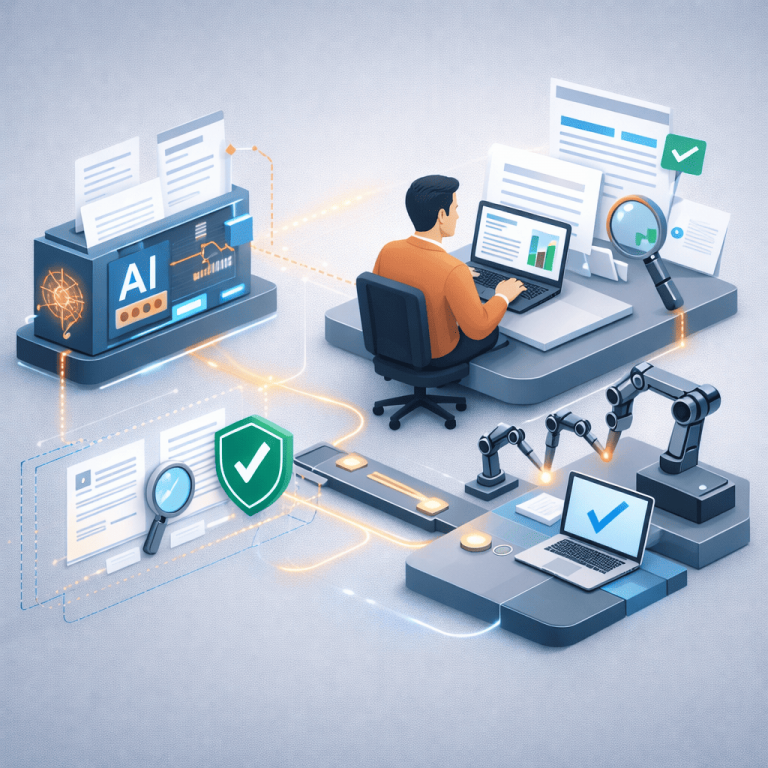
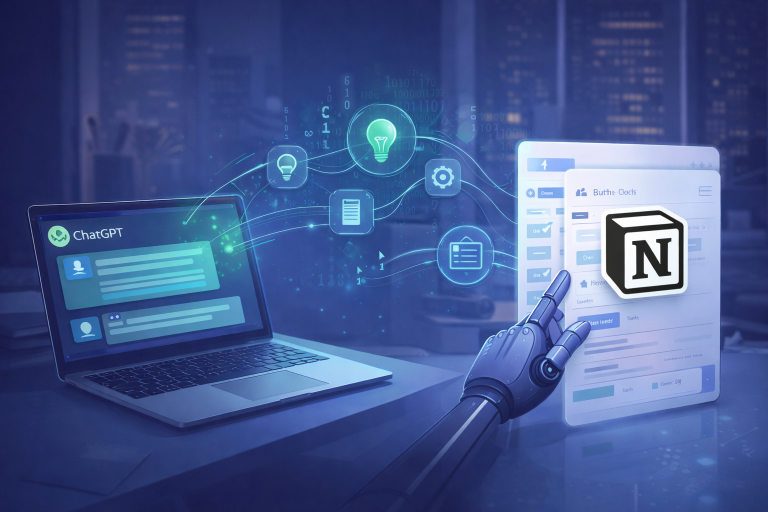
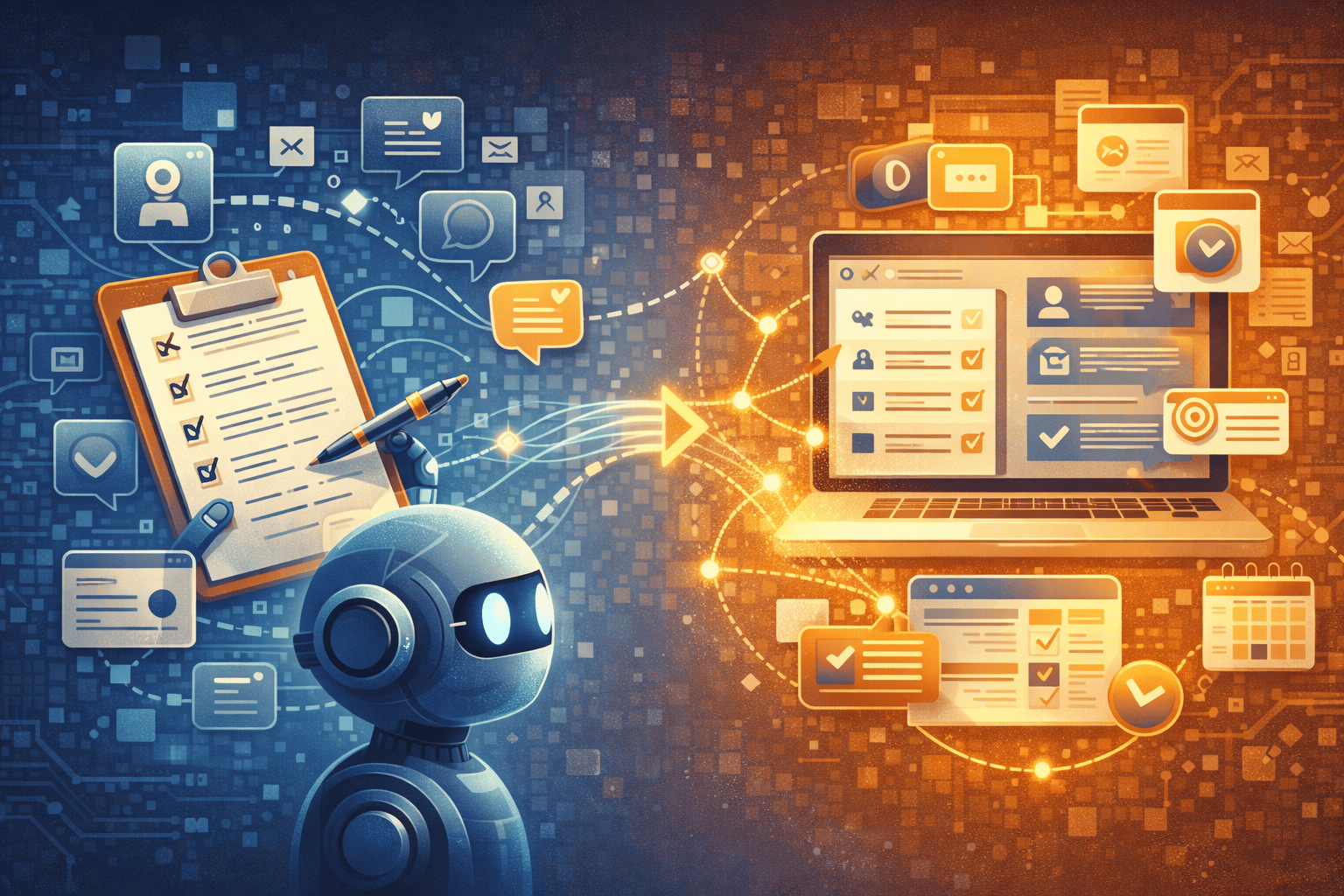
Conversation → Structured Summary → Task Extraction → System Integration
This transformation requires intentional structure.
AI meeting notes should be prompted or configured to:
- identify explicit decisions
- detect implied commitments
- assign responsible individuals
- suggest realistic timelines
- flag unresolved questions
When AI is trained to detect accountability signals, notes evolve into operational input.
Designing the Workflow
To make AI meeting notes actionable, implement these steps:
1. Standardize Output Format
Ensure the AI output includes clear sections such as:
- Decisions made
- Action items
- Responsible person
- Deadline
- Open issues
Structure precedes automation.
2. Connect to Task Systems
AI meeting notes must feed into:
- task managers
- project boards
- knowledge bases
- CRM systems
Without integration, summaries remain passive documents.
This is where end-to-end AI workflows outperform isolated automations.
3. Reduce Decision Fatigue After Meetings
Post-meeting fatigue is real. Participants often delay task formalization because it requires additional mental effort.
Well-designed AI meeting notes remove this burden by:
- converting commitments into structured tasks automatically
- suggesting priority levels
- identifying dependencies
This directly reduces decision fatigue and improves execution reliability.
Avoiding Over-Automation
Automation must remain contextual.
Blindly converting every sentence into a task creates noise. Instead, AI should:
- distinguish between discussion and commitment
- flag uncertainty
- escalate ambiguous responsibilities
Over-automation risks producing clutter instead of clarity — a problem often seen in poorly designed knowledge systems.
Context Preservation Matters
Effective meeting notes must capture nuance that simple bullet lists cannot preserve.
AI meeting notes should preserve:
- reasoning behind decisions
- assumptions discussed
- constraints acknowledged
This prevents future misunderstandings and reduces the need to revisit conversations.
Context-aware systems scale better over time than raw transcription tools.
When This Approach Works Best
Using AI to turn meeting notes into actionable tasks works especially well when:
- teams run frequent recurring meetings
- cross-functional coordination is required
- projects involve multiple stakeholders
- follow-up accountability is critical
In these environments, automation improves consistency and reduces friction.
The Role of Human Oversight
AI should support clarity, not replace judgment.
A lightweight review layer ensures:
- tasks are realistic
- priorities align with strategy
- commitments are interpreted correctly
Human oversight maintains trust in the system.
Measuring the Impact of Better Meeting Notes
Improving meeting notes is not just about clarity. It is about measurable outcomes.
Well-structured meeting notes reduce follow-up confusion, shorten task clarification cycles, and decrease the number of repeated discussions. Over time, teams notice fewer “What did we decide?” moments and more consistent execution.
AI-enhanced meeting notes also improve transparency. When action items are clearly assigned and tracked, accountability increases without adding friction. Instead of relying on memory or scattered documents, teams operate from a shared, structured reference point.
In environments with frequent cross-functional collaboration, this consistency compounds. Each meeting builds on the previous one without losing momentum.
Final Thoughts
AI meeting notes become more powerful when treated as workflow inputs rather than documentation.
The goal is not better summaries.
It is a better execution.
When meetings automatically generate structured, accountable tasks, knowledge work becomes less dependent on memory and more dependent on reliable systems.
That is where AI delivers measurable impact.