Why AI Automation Is Shifting from Tools to Systems
AI automation is no longer defined by individual tools that perform isolated tasks. Instead, it is evolving into systems that manage entire workflows from start to finish. This shift is not driven by better algorithms alone, but by the growing complexity of modern knowledge work.
For years, automation focused on replacing manual actions. Today, the focus is on replacing coordination, decision overhead, and system-level inefficiencies. That is why AI automation is moving away from tools and toward systems.
The Limits of Tool-Based AI Automation
Early AI automation followed a familiar pattern:
- A tool was introduced to speed up a specific task
- Another tool handled a related step
- Integrations attempted to connect them
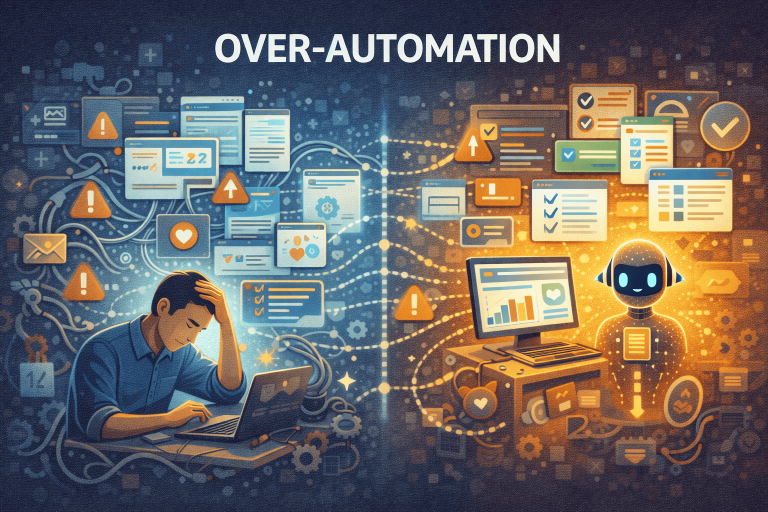
Each tool worked in isolation. Over time, organizations accumulated dozens of AI-powered tools that solved local problems but created global complexity.
Common symptoms appeared:
- Automation chains broke silently
- Context was lost between tools
- Ownership of outcomes became unclear
- Humans had to constantly supervise the execution
Tool-based AI automation optimizes steps, not outcomes.
Why AI Automation Now Requires System-Level Design
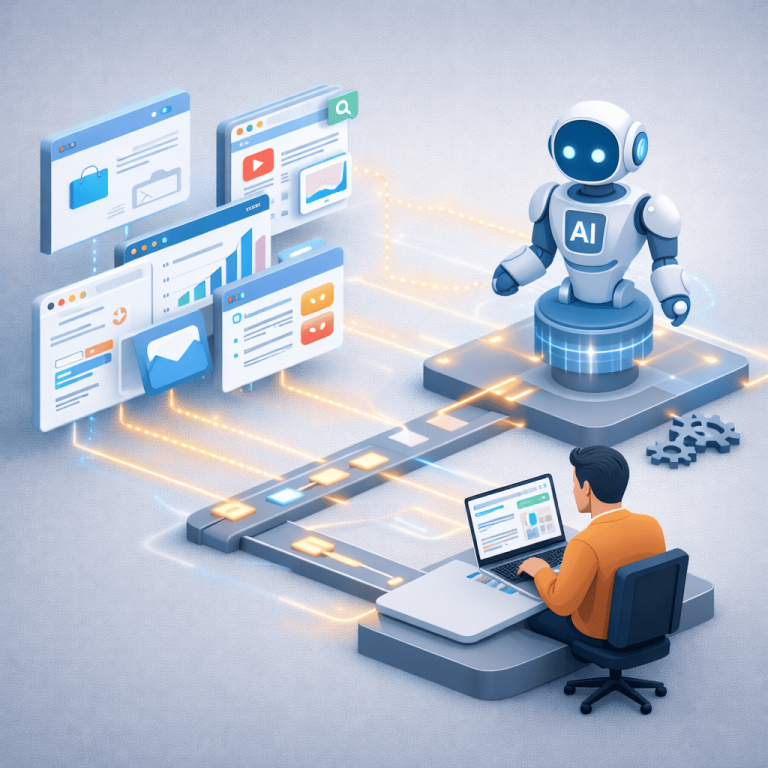
As workflows grow more complex, automation must understand more than a single action. It needs awareness of what has already happened, what is currently in progress, and what should happen next. This requires maintaining context over time, coordinating actions across tools, adapting to changing conditions, and knowing when to involve humans.
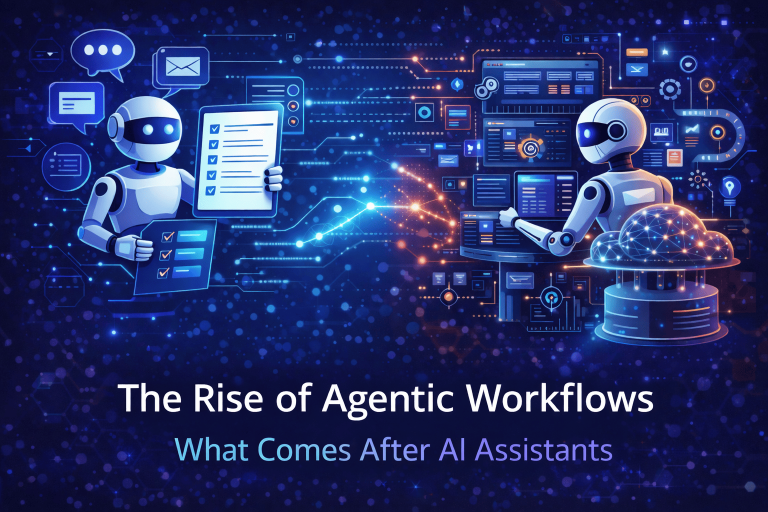
Standalone tools cannot meet these requirements on their own. They lack persistence, memory, and accountability. That is why automation is increasingly designed as a system rather than a collection of features, closely aligning with the rise of agentic workflows built around goals and autonomy.
AI Automation vs AI Systems
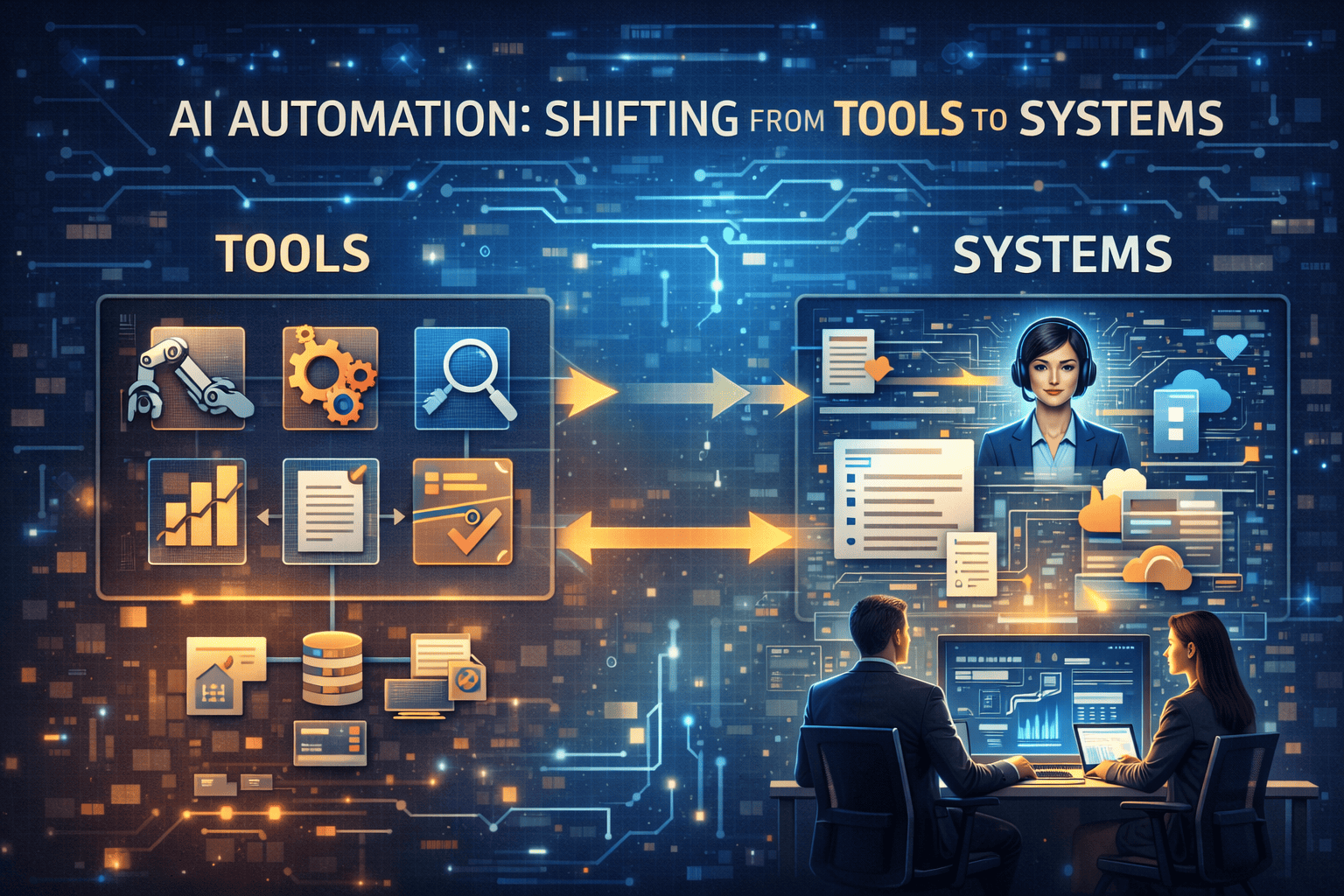
The difference between tools and systems is structural.
AI tools:
- Perform predefined actions
- Operate on demand
- Require explicit triggers
- Have limited awareness
AI systems:
- Operate continuously
- Respond to events
- Maintain internal state
- Make context-aware decisions
AI automation becomes truly effective only when it is embedded inside a system that understands why something happens, not just how to execute it.
How AI Automation Benefits from a Systems Approach
When automation is designed as a system, several changes occur:
1. From Task Execution to Outcome Management
The system focuses on results, not individual steps.
2. From Reactive to Event-Driven
Actions are triggered by changes in data, not schedules.
3. From Manual Oversight to Human-in-the-Loop
Humans supervise decisions instead of performing execution.
4. From Fragile Integrations to Orchestration
The system coordinates tools instead of chaining them.
These shifts dramatically reduce operational friction.
Real-World Example: Reporting Automation
In a tool-based model:
- One tool pulls data
- Another generates charts
- A third distributes reports
In a system-based model:
- Data is monitored continuously
- AI detects meaningful changes
- Insights are generated automatically
- Actions are triggered or escalated
This is why AI automation increasingly replaces reporting processes, not just reporting tasks.
Why Organizations Are Forcing This Shift
Several pressures accelerate the move from tools to systems:
- SaaS sprawl increases cognitive load
- Decision speed becomes a competitive advantage
- Manual coordination does not scale
- Knowledge work becomes more asynchronous
AI automation systems reduce these pressures by absorbing complexity instead of exposing it to humans. This trend is reinforced by industry research on AI-driven automation and organizational decision-making published by McKinsey.
The Role of Humans in AI Automation Systems
A common misconception is that systems remove humans entirely.
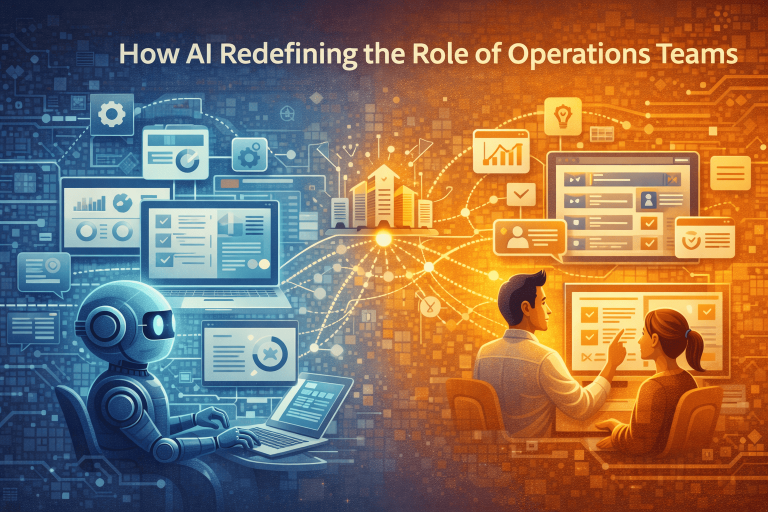
In reality, systems change the role of humans:
- From execution to supervision
- From task handling to goal setting
- From constant decisions to exception handling
AI automation systems work best when responsibilities are clearly divided:
- AI handles volume and consistency
- Humans handle judgment and accountability
This balance builds trust and reliability.
Common Mistakes When Moving to AI Systems
Organizations often fail by:
- Adding AI to existing tools without redesigning workflows
- Automating steps instead of outcomes
- Removing humans too early
- Ignoring observability and logging
AI automation systems must be designed intentionally. They cannot emerge organically from disconnected tools.
Why This Shift Will Continue
The future of AI automation is not about smarter tools. It is about better systems.
As AI capabilities improve, the bottleneck shifts from execution to coordination. Systems absorb coordination. Tools do not.
That is why AI automation will continue moving toward:
- End-to-end workflows
- Agentic systems
- Continuous operation
- Outcome-based design
Final Thoughts
AI automation is not becoming more complex for its own sake. It is becoming more structured.
The shift from tools to systems reflects a deeper change in how work is organized. Automation is no longer a collection of shortcuts. It is becoming infrastructure.
The organizations that succeed will not be the ones with the most AI tools, but the ones with the clearest systems — where AI automation operates quietly in the background, and humans focus on decisions that truly matter.